
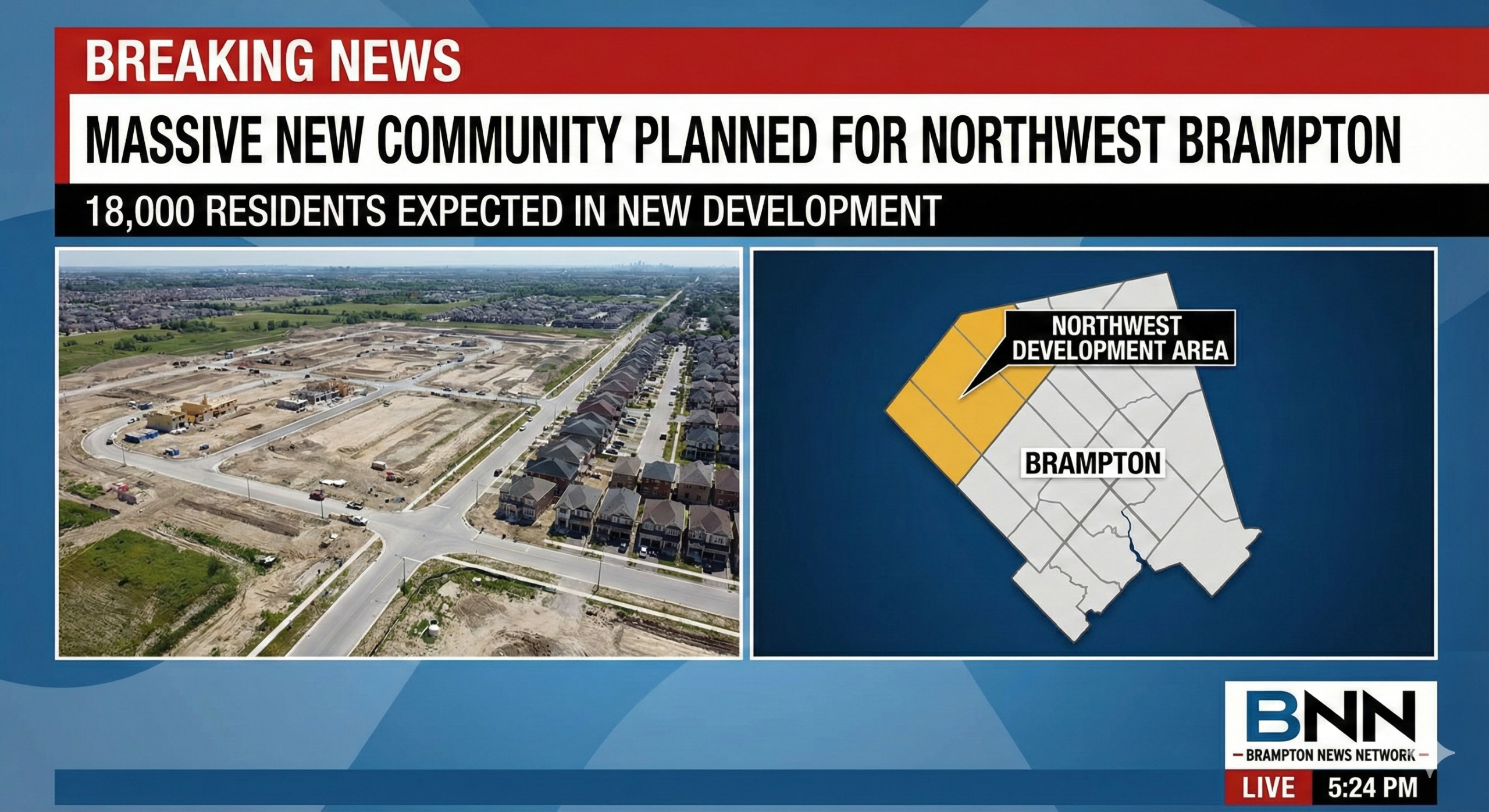

Massive New Community Planned for Northwest Brampton: 18,000 Residents Expected
Brampton is preparing for a major expansion with plans for a new, vibrant community in the city’s northwest region. The ambitious development aims to provide housing, recreational spaces, and educational facilities for over 18,000 residents, marking a significant milestone in the city’s ongoing urban growth.
Overview of the Proposed Development
The proposed community spans approximately 372.92 hectares, strategically located between major transportation routes and natural boundaries. The site is roughly bordered by Winston Churchill Boulevard to the west, the CN Railway to the north, Bovaird Drive to the south, and the proposed Highway 413 to the east. This prime location offers both accessibility and the potential for sustainable urban living.
City planners envision a mixed-use neighbourhood that blends residential living with ample green space and community services. The development proposal includes:
-
Nearly 6,000 new homes
-
Seven parks
-
Three new schools
These features aim to meet the diverse needs of future residents, providing a balanced lifestyle with convenient amenities and recreational opportunities.
Residential Components
Diverse Housing Options
The new community is expected to feature a wide variety of housing types to accommodate different family sizes and income levels. From single-family homes to townhouses and low-rise condominiums, the development will aim to cater to a diverse population, ensuring affordability and inclusivity.
City planners have emphasized sustainable design principles, including energy-efficient buildings, pedestrian-friendly streets, and integrated cycling networks. By focusing on walkability and connectivity, the project seeks to create a cohesive community where residents can live, work, and play without relying heavily on cars.
Anticipated Population Growth
Once fully developed, the community is projected to house more than 18,000 people, contributing significantly to Brampton’s population growth. The expansion aligns with the city’s long-term urban planning strategy, which emphasizes responsible growth, infrastructure development, and sustainable neighbourhood design.
Parks and Recreational Spaces
Seven Parks for Community Well-being
A key highlight of the development is the inclusion of seven parks, which will provide ample recreational space for residents of all ages. These parks are expected to feature playgrounds, walking trails, sports fields, and green corridors, promoting active lifestyles and environmental stewardship.
By incorporating green spaces throughout the community, planners aim to enhance quality of life, reduce urban heat effects, and create habitats for local wildlife. Public consultation sessions have emphasized the importance of accessible and safe outdoor spaces for families, seniors, and youth.
Connectivity and Trails
In addition to individual parks, the development plan includes a network of walking and cycling trails, connecting residents to schools, parks, and nearby commercial areas. This approach encourages alternative transportation methods, supporting Brampton’s broader sustainability goals and reducing traffic congestion.
Education and Schools
Three New Schools Planned
Education infrastructure is a critical component of the proposed community. The development includes plans for three new schools, ensuring that children have access to quality education close to home.
City planners are coordinating with local school boards to determine the type of schools needed, including elementary and secondary institutions, to accommodate the anticipated population. The schools will be strategically located to ensure safe pedestrian access and to integrate seamlessly with surrounding parks and residential areas.
Focus on Community-Centric Learning
The schools are expected to adopt modern educational facilities and resources, designed to support both academic achievement and extracurricular engagement. This includes spaces for arts, sports, and community events, fostering an environment where students can thrive.
Transportation and Accessibility
Proximity to Major Roads and Highway 413
The proposed development is strategically located near major transportation corridors, providing residents with easy access to Brampton’s city centre and surrounding regions. Winston Churchill Boulevard, Bovaird Drive, and the CN Railway line define the community’s boundaries, while the proposed Highway 413 will enhance regional connectivity once completed.
Sustainable Transit Solutions
City planners are also focusing on public transit integration, including potential bus routes and transit hubs within the community. The goal is to reduce dependency on personal vehicles and promote environmentally friendly travel options.
Economic and Social Impact
Boost to Local Economy
The new community is expected to generate significant economic benefits for Brampton. The construction phase alone will create jobs in engineering, construction, landscaping, and planning, while the completed community will support local businesses, retail outlets, and service providers.
Strengthening Community Ties
Beyond economic impact, planners emphasize the social benefits of a well-designed neighbourhood. By incorporating parks, schools, community centres, and public spaces, the development aims to foster a strong sense of belonging, social interaction, and overall well-being for residents.
Planning and Consultation
City Approval Process
The proposed community is currently under review by Brampton’s city planning department. The approval process involves public consultation, environmental assessments, and detailed planning studies to ensure the project meets all regulatory and sustainability standards.
Community Engagement
City officials have highlighted the importance of resident input, with public meetings and feedback sessions scheduled to gather opinions on housing types, park designs, and overall community layout. This approach ensures that the development reflects the needs and aspirations of future residents.
Environmental Considerations
Sustainable Design Principles
Environmental sustainability is central to the planning of this new community. Measures include stormwater management systems, energy-efficient building standards, and preservation of natural habitats.
Green Corridors and Wildlife Protection
Planners aim to maintain green corridors to support local flora and fauna, ensuring that urban expansion does not come at the expense of biodiversity. The seven parks and surrounding trails are designed to provide safe spaces for wildlife while offering residents access to nature.
Looking Ahead
Timeline and Future Developments
While the development is still in the planning stages, city officials anticipate that construction could begin within the next few years, pending approvals and final planning decisions. Over time, the community is expected to evolve into a self-sustaining neighbourhood, combining residential, educational, recreational, and commercial elements.
Long-Term Benefits
Once completed, this new community in northwest Brampton will serve as a model for sustainable urban planning, balancing growth with quality of life. The integration of parks, schools, trails, and diverse housing options demonstrates a commitment to creating a livable, vibrant, and inclusive neighbourhood for all residents.
Conclusion
The proposed northwest Brampton community represents a significant milestone in the city’s growth, with plans for over 18,000 residents, nearly 6,000 homes, seven parks, and three schools. By prioritizing sustainability, accessibility, and community engagement, Brampton is set to create a thriving neighbourhood that meets the needs of current and future generations. As planning progresses, the city will continue to seek input from residents and stakeholders to ensure the development reflects the vision of a modern, inclusive, and environmentally responsible community.