
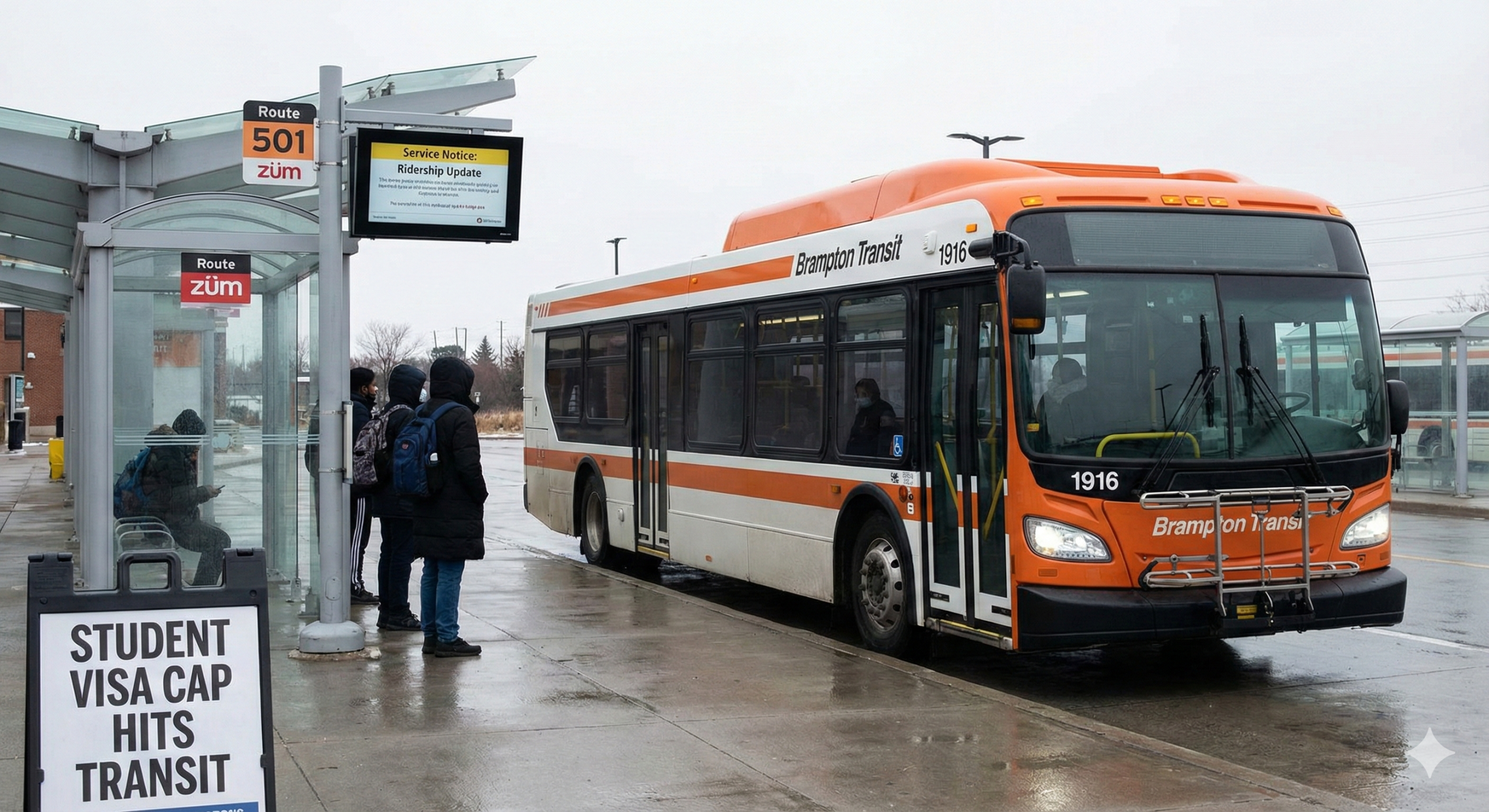

Brampton Transit Ridership Plunges as City Blames Federal Cap on International Student Visas
Brampton officials are sounding the alarm after a dramatic decline in transit ridership this year, which city staff say is directly tied to federal immigration policy changes limiting international student visas.
A report presented at the Nov. 26 general committee meeting by chief budget officer Mark Medeiros shows Brampton is facing a projected $17.5-million operating deficit for 2025. The single largest factor: a steep drop in Brampton Transit ridership.
According to the third-quarter budget forecast, transit use dropped by a record 20 per cent year-over-year, resulting in a $26-million shortfall in fare revenue.
Visa Cap Blamed for Sharp Decline
City staff attribute the ridership crash largely to the federal government’s two-year cap on international student visas, introduced in May 2024 and implemented in September. The policy reduced the number of new student permits by 35 per cent compared to 2023.
Brampton—home to large numbers of international students and private colleges—has long relied on this demographic as one of its core transit user groups.
“The projected deficit is primarily driven by the impacts of federal immigration policy changes,” the staff report states, adding that fewer international post-secondary students and temporary residents have combined with broader economic pressures, including rising unemployment, to fuel the sudden downturn.
From Fastest-Growing to Sudden Decline
The drop marks a sharp reversal from the city’s recent trajectory.
Brampton, which was Canada’s fastest-growing major city in the 2021 census and recently surpassed Mississauga as the seventh-largest city in the country, has seen explosive transit growth over the past decade.
In 2024 alone, the city reported a 30 per cent increase in public transit ridership compared to pre-pandemic levels.
Mayor Patrick Brown, who previously supported the federal visa cap as a tool to relieve Brampton’s housing and illegal rooming house pressures, acknowledged that the consequences on transit are serious.
“A 20 per cent decline because of the changes to international students is quite alarming,” Brown told council.
“We’ve been the fastest-growing transit system in the country — and then all of sudden, we have this year where there’s this massive change because of the federal immigration policy adjustment.”
Next Steps: Staff to Propose Solutions
In response, council has directed staff to return with options for mitigating both the revenue loss and the ridership collapse. Potential strategies may include:
-
Reallocating routes or adjusting service levels
-
Increased marketing for local riders
-
Financial support requests to higher levels of government
-
Operational efficiencies within the transit system
No timelines have yet been released for when staff will present their recommendations.