

Brampton Reconsiders Stop-Arm Cameras to Prevent Illegal Passing of School Buses
Introduction
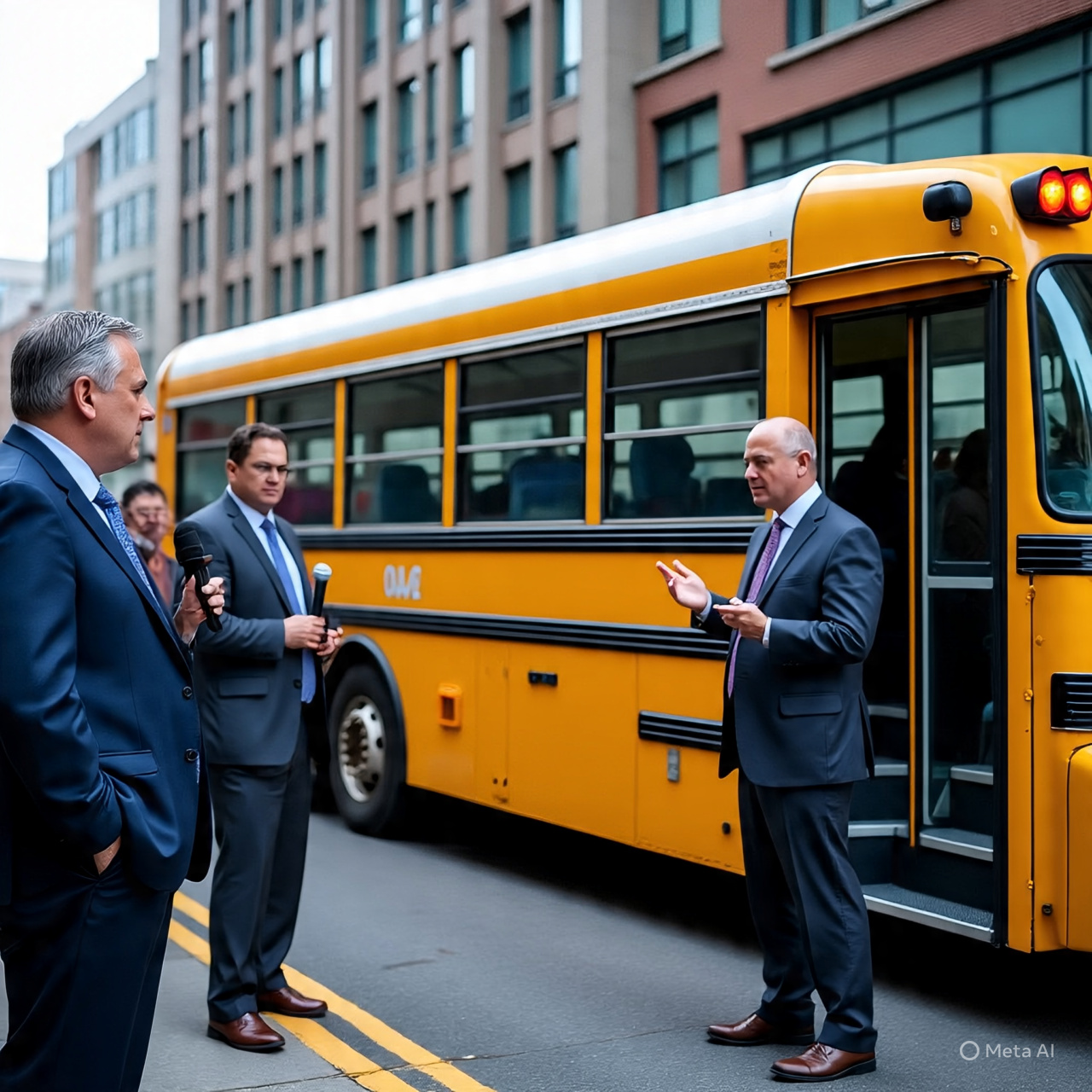
Brampton city council is revisiting a safety initiative aimed at protecting children as they board and exit school buses, proposing the possible installation of stop-arm cameras on buses operating within city limits. The technology, designed to identify and penalize drivers who illegally pass school buses while their stop arms and flashing lights are engaged, is being reconsidered after a similar regional effort in Peel was shelved two years ago.
With pedestrian and student safety remaining a growing concern, councillors believe this renewed approach may serve as an effective deterrent — despite past obstacles related to cost, technology compliance, and program feasibility. The move also follows recent changes in provincial policy regarding automated enforcement in school and community safety zones.
Council Directs Staff to Study Feasibility
At a recent meeting, Brampton council officially directed staff to investigate the feasibility of adding stop-arm enforcement cameras to school buses. The study will consider legal requirements, potential costs, operational implications, and the anticipated safety impact of such a program.
Coun. Michael Palleschi, who represents Wards 2 and 6, introduced the idea as a way to reinforce protections for students. He has long supported the use of this technology, having previously worked on implementing a version of the program during his time with Peel Region.
“Even when it didn’t move forward at the regional level, I believed there was still an opportunity for Brampton to take independent action,” Palleschi told council. “Our priority must be ensuring children can get on and off their buses without facing reckless drivers.”
City staff are expected to present their findings to council sometime next year, at which point members will determine whether to advance the program.
A Technology That Has Been Approved — But Not Implemented
Stop-arm cameras were approved for municipal use by the Ontario provincial government in 2017. These cameras are designed to record license plates of vehicles that fail to stop when a school bus has its stop arm extended. Under the Highway Traffic Act, drivers must stop for school buses when red lights are flashing, regardless of the direction of travel, with limited exceptions on divided roadways.
In 2021, Peel Regional Council approved a region-wide plan that would have equipped school buses across Brampton, Mississauga, and Caledon with the technology. The plan involved a partnership between the Student Transportation of Peel Region (STOPR) and BusPatrol Inc., a company that provides stop-arm camera solutions in various jurisdictions.
Despite initial support, the initiative stalled due to concerns about legal compliance, implementation structure, and cost complications. By January 2023, the region officially ended negotiations with BusPatrol, and the camera program was discontinued before any equipment could be installed.
Why the Peel Program Fell Apart
According to Joe Avsec, Peel Region’s acting director of transportation transition, several issues prevented the previous plan from moving forward. While negotiations took place with BusPatrol and other stakeholders, the proposed program model did not fully comply with provincial guidelines.
“Regional council was very clear that the program had to meet all legal standards, be cost neutral, and align with local court capacity,” Avsec explained. “Unfortunately, the model being proposed didn’t meet those criteria, and the parties were unable to reach an agreement that worked for all sides.”
This led Peel Region to discontinue the plan entirely. Instead, the region opted to rely on other safety improvements mandated by Transport Canada, including extended stop signal arms and rear-facing cameras installed on newer school buses.
Are Stop-Arm Cameras Actually Effective?
Skepticism about the effectiveness of stop-arm cameras has played a role in delaying similar programs elsewhere. Peel officials pointed out that, in many instances, safety concerns around school transportation arise from mechanical or operational issues with the buses themselves — not just from passing vehicles.
Transportation officials have suggested that only a portion of school bus-related incidents involve illegal passing. Additional measures already in place, such as increased driver awareness campaigns, enhanced signage, community safety zones, and targeted police enforcement, are believed to reduce risks for students.
However, supporters of stop-arm cameras argue they are a proven deterrent in regions where the technology has been fully adopted. By introducing owner-liability penalties, the system ensures that a fine can be issued even when police are not present at the time of the offence.
Owner-Liability Could Increase Compliance
Under Ontario law, passing a stopped school bus with its stop arm extended is an owner-liable offence, meaning the registered vehicle owner is responsible if the driver is not immediately identified. This makes automated enforcement particularly effective, as it eliminates the need for an officer to physically stop the vehicle in every instance.
Peel Regional Police have expressed openness to the use of stop-arm cameras in Brampton. Const. Tyler Bell-Morena, a media spokesperson for the service, confirmed that police currently receive complaints through online reporting tools and from citizens using dash cameras.
“When reports include clear footage with date and location data, we can investigate and in some cases lay charges,” he said. “But having dedicated stop-arm camera systems would be a very helpful addition for enforcement.”
Cost Could Be the Biggest Hurdle
Despite the renewed interest, councillors are fully aware that a stop-arm camera program would require a significant upfront investment. The cost of equipping each school bus with camera technology could amount to thousands of dollars per unit, raising questions about who would pay for installation, maintenance, and data processing.
Palleschi acknowledged that this financial reality is one of the biggest challenges facing the project.
“What we may not like is the overall cost,” he stated. “Bus operators are unlikely to shoulder the entire expense, and the city also has to consider whether this fits into its broader budget priorities.”
Potential funding models being examined include revenue sharing from issued fines, partnerships with transportation providers, and phased implementation focused on high-risk zones around schools.
Public Safety vs. Budget Constraints
The growing debate underscores a common challenge municipalities face: balancing financial limitations with public safety expectations. Parents, school administrators, and community advocates have consistently called for stronger enforcement against drivers who endanger children.
In areas where similar programs exist, officers and educators have reported increased driver compliance once the cameras are introduced. Signs posted on buses and roads that warn of automated enforcement can also have a preventative effect, even before fines are issued.
From a policy perspective, supporters say that even one injury or fatality on a school route is too many — making every reasonable step toward prevention worth considering.
Conclusion
Brampton’s decision to explore stop-arm cameras represents a renewed commitment to improving road safety for the city’s most vulnerable residents — its children. While a similar initiative failed at the regional level in the past, advancements in technology, changes in public expectations, and increasing concerns about road behavior have sparked fresh interest in the idea.
The upcoming feasibility report will play a critical role in shaping the future of the program. It will answer key questions about cost, legality, implementation, and long-term sustainability. Until then, Brampton council remains cautiously optimistic that a clear, workable path can be found.