
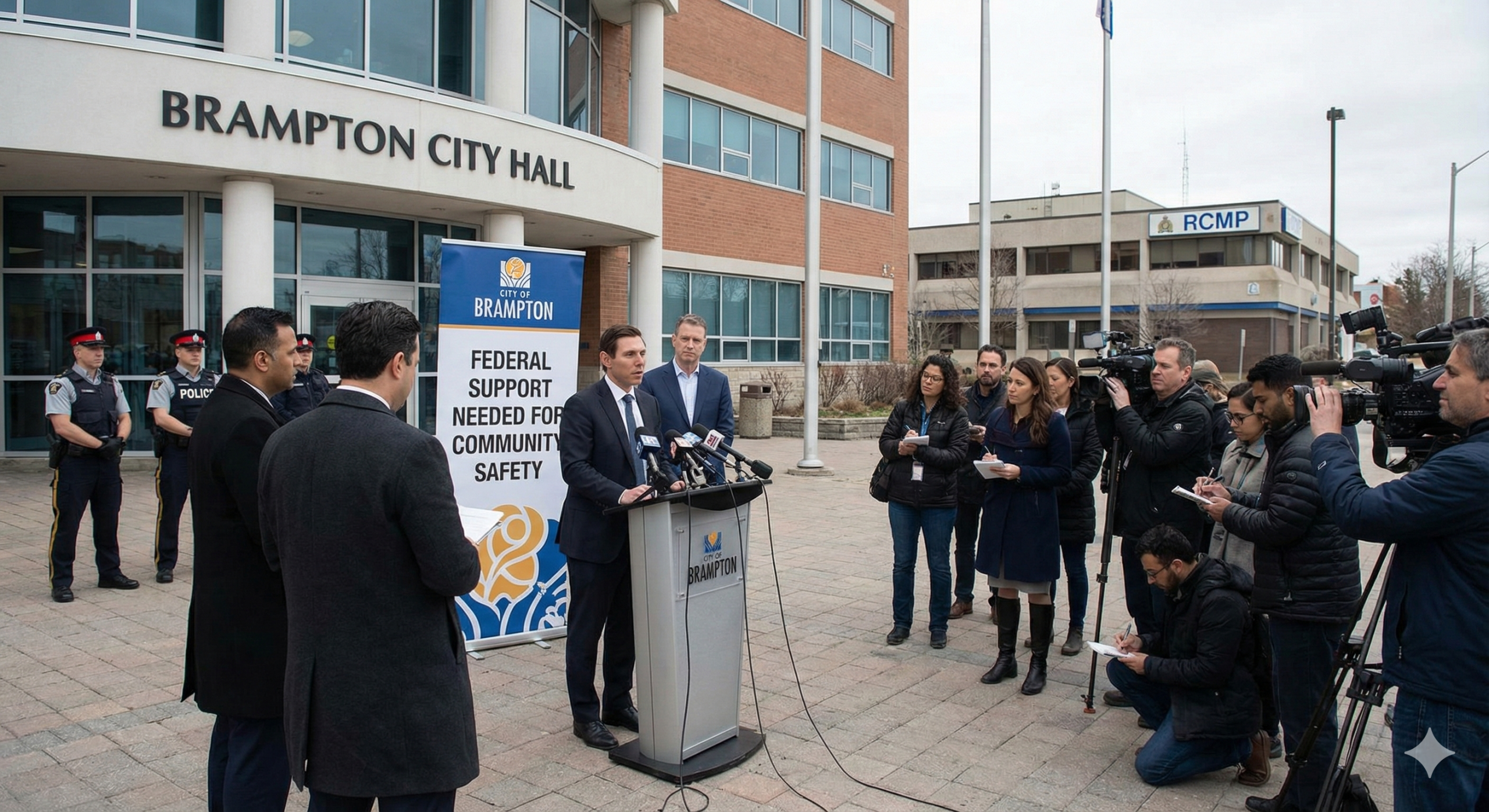

Brampton Mayor Patrick Brown Calls for Federal Support to Combat Extortion and Organized Crime
Brampton, Ontario — Brampton Mayor Patrick Brown is urging the federal government to provide additional support to combat extortion and transnational organized crime in the Region of Peel, citing a surge in criminal activity targeting local businesses and vulnerable community members.
In a letter dated December 16, 2025, addressed to Prime Minister Mark Carney and Public Safety Minister Gary Anandasangaree, Mayor Brown highlighted the increasing sophistication and cross-border nature of these crimes, noting that municipal resources alone are insufficient to effectively address the threat.
“The scale, sophistication and cross-border nature of these crimes place them well beyond what municipal resources alone can sustainably address,” Brown wrote.
The call for federal intervention mirrors recent actions taken in British Columbia, where the federal government allocated dedicated funding for integrated enforcement teams targeting organized crime, alongside investments in victim support, outreach, and safety planning.
Escalating Extortion Rates in Peel
Brampton’s plea for federal assistance comes amid alarming statistics showing a sharp rise in extortion cases across Peel. According to Peel Regional Police, business-related extortion incidents in Brampton and Mississauga jumped from 50 cases in 2023 to 153 in 2024, and 172 cases recorded so far in 2025.
Mayor Brown emphasized that these numbers meet or exceed the levels that justified federal intervention in British Columbia.
“As such, equitable treatment demands that federal support follow crime severity rather than geography,” Brown wrote. “Without comparable federal investment, communities such as Brampton are left exposed to criminal networks that operate internationally, exploit digital platforms and rely on intimidation to silence victims.”
Community Impact: Small Businesses and Vulnerable Residents Targeted
The surge in criminal activity has disproportionately affected small businesses, community organizations, and individuals from the South Asian diaspora. Extortion methods have ranged from threats of violence and arson to intimidation tactics designed to silence victims.
On December 7, several Sikh organizations hosted a town hall meeting in Brampton to address what they described as an unprecedented wave of extortion crimes. The event brought together community leaders, law enforcement, and politicians to discuss the growing threats.
“We have a national crisis where hundreds of members of my community have been targeted with extortions, shootings, threats, and intimidation, and the source of these threats are all Indian-based,” said Balpreet Singh, legal counsel and spokesperson for the World Sikh Organization of Canada.
The Bishnoi Gang: A Transnational Threat
Much of the concern in Brampton centers on the Bishnoi Gang, led by Lawrence Bishnoi, currently incarcerated in India. The gang has been linked to a series of murders, extortion schemes, and intimidation campaigns across Canada, particularly targeting members of the South Asian community.
In September 2025, the federal government officially designated the Bishnoi Gang as a terrorist entity, a move praised by both Mayor Brown and Peel police. This designation allows for greater federal resources and intelligence-sharing capabilities in tackling organized crime networks operating internationally.
“Designation as a terrorist entity strengthens law enforcement’s ability to disrupt the gang’s activities and protect vulnerable communities,” a City of Brampton news release stated.
Recommendations for Federal Action
Mayor Brown’s letter to the federal government outlined several key recommendations to address the growing crisis in Peel:
-
Extend Federal Task Force Funding:
Brown urges the federal government to expand funding for dedicated extortion and organized crime task forces to the Region of Peel, following the operational model established in British Columbia. -
Enhance Victim Support and Community Outreach:
Funding should be allocated for culturally informed victim services, safety planning initiatives, and programs encouraging reporting while protecting those who come forward. -
Improve Intelligence-Sharing and Coordination:
Mayor Brown called for formalized frameworks enabling collaboration between federal, provincial, and municipal law enforcement agencies to disrupt transnational criminal networks effectively.
“These actions would significantly strengthen public safety, protect vulnerable communities, and ensure a coordinated national response to a threat that is neither local nor isolated,” Brown stated.
Municipal Backing and Council Support
The push for federal intervention has received unanimous support from Brampton city council. In a motion passed on December 10, council formally requested the federal government to replicate the British Columbia model of integrated enforcement teams and victim support funding in Peel.
Peel police officials highlighted during the council meeting that extortion is increasingly sophisticated and digitally coordinated, often spanning multiple jurisdictions.
“The organized crime networks targeting Peel businesses are operating on a level that requires federal expertise and resources,” a police spokesperson said.
Growing Concern Over Public Safety
Community members, business owners, and advocacy groups have voiced deep concern over the impact of extortion on local safety and economic stability. Small businesses report feeling intimidated and fearful, while families, particularly within the South Asian community, have expressed distress over the threats targeting their homes and livelihoods.
“Without federal intervention, our community remains vulnerable to criminals who are not deterred by local enforcement alone,” said Brown.
The mayor’s office emphasized that the current municipal resources are overstretched and that federal support is necessary to effectively dismantle transnational criminal operations and protect residents.
Federal Response and Next Steps
While no official response from the federal government had been issued at the time of publication, officials in British Columbia cited federal task force funding and integrated law enforcement teams as a successful model for reducing organized crime activity.
Experts suggest that a similar investment in Peel could include:
-
Joint operations between municipal and federal authorities targeting extortion networks
-
Enhanced monitoring of digital platforms used to facilitate criminal activity
-
Training and resources for culturally informed community outreach
-
Expansion of legal and victim support services
Community Calls for Action
The recent town hall hosted by Sikh organizations highlighted the need for community-driven solutions alongside law enforcement intervention. Attendees emphasized the importance of reporting extortion incidents, protecting victims, and fostering collaboration between government agencies and affected communities.
“The community must feel empowered to speak up,” said Balpreet Singh. “Combined with federal support, this can help break the cycle of intimidation and criminal control.”
Conclusion
Brampton Mayor Patrick Brown’s call to action reflects a growing national concern over organized crime networks operating across borders and exploiting vulnerable communities. With extortion cases rising sharply and transnational gangs like the Bishnoi Gang actively targeting residents, Brown is advocating for federal intervention modeled on British Columbia’s success.
By extending funding for task forces, enhancing victim services, and improving intelligence-sharing frameworks, Peel could see a coordinated approach to combat organized crime, ultimately protecting residents, businesses, and the broader community from escalating threats.
“The severity of the problem in Peel demands a response proportional to the threat. Communities deserve the same protection as others facing similar criminal challenges,” Brown concluded in his letter.